

Lyrics
Lessons




Where it's played
On 1 jam night at 1 jam.


About this song
John Hardy is a traditional ballad about a real killing. John Hardy was a Black railroad worker in McDowell County, West Virginia. In 1893 he shot a man named Thomas Drews in a drunken argument over a craps game near Keystone, and he was hanged in Welch on January 19, 1894. The song spread quickly through the mountains. The Carter Family's 1928 record, titled "John Hardy Was a Desperate Little Man," is the one that made it widely known.
| Year | Artist | Notes |
|---|---|---|
| 1924 | Eva Davis | First known recording |
| 1928 | The Carter Family | |
| 1967 | Lester Flatt and Earl Scruggs with Doc Watson | One of the two records most bluegrass players learn it from |
| 1984 | Tony Rice | The other record many pickers know it from |
Also recorded by Ernest Stoneman and Buell Kazee.
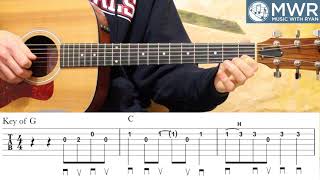
The verse in the chart above is ten bars long instead of the usual eight, and it starts on the 4 rather than the 1, so count it through once before you jump in.
In the collections Doc Watson, Flatt & Scruggs and Tony Rice.
You might also like
People who play this also play
- Clinch Mountain Backstep 17 people play both A
- Lonesome Road Blues 14 people play both G
- Ground Speed 12 people play both G
- Old Home Place 21 people play both G
- Sitting On Top Of The World 16 people play both G
- Forked Deer 10 people play both D
- Fireball Mail 13 people play both G
- Old Joe Clark 18 people play both A
- Your Love Is Like A Flower 12 people play both G
- John Henry 12 people play both D
More by this artist
Also by Doc Watson and Flatt & Scruggs
- Nine Pound Hammer A
- Two Dollar Bill G
- Bury Me Beneath The Willow Also by Doc Watson and Tony Rice G
- Bill Cheatham A
- Blackberry Blossom Also by Doc Watson and Tony Rice G
- Billy In The Lowground Also by Doc Watson and Tony Rice C
- The Train That Carried My Girl From Town D
- Foggy Mountain Top G
- Southbound A
- Groundhog G
Same chord changes
Shares the 1–4–1–5 changes